
Infinite Italian
JernungEducational
4.758.00 Reviews
- Version
- 4.6.0
- Installs
- 50.00K
- Age Rating
- Everyone
Screenshots
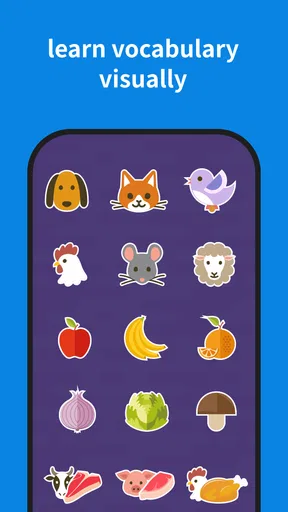
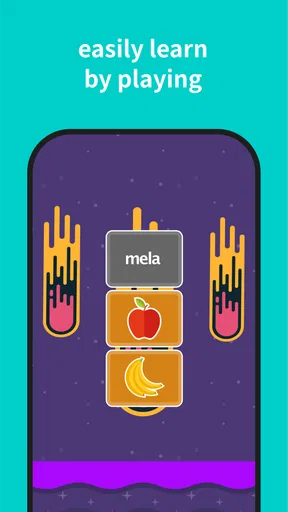
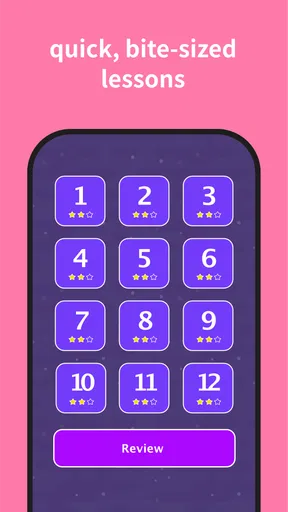
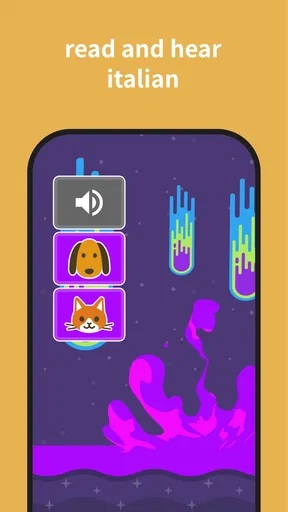
Our Review of Infinite Italian
 Analysis by Appyee
I approached Infinite Italian as a small daily-learning game rather than as a replacement for a complete Italian course. That distinction matters. Its focus is vocabulary practice through interactive lessons, quizzes, and flashcards, so the experience is built around repeated contact with words and quick checks of recall. I found that format easy to pick up when I had only a few spare minutes, especially when I wanted something more active than rereading a word list.
It is a free educational game from Jernung, rated for Everyone, and it runs on Android devices using version 7.0 or later. The app has reached over 50 thousand installs and holds a 4.7 average from around 891 ratings, which gives it a reassuring first impression without making it seem like a massive, all-purpose language platform. The current version is 4.6.0, and the game was released on February 7, 2018. Those details place it in the category of an established, focused learning tool rather than a brand-new experiment.
What learning Italian feels like inside the game
The most useful way to understand this app is to think of it as a vocabulary workout with game-like presentation. Instead of opening a traditional textbook and deciding what to study, I could move directly into a lesson, test myself with a quiz, or revisit material through flashcards. That removes one common obstacle in language learning: spending more time organizing study than actually remembering words.
The lesson format is particularly approachable for beginners. A new learner can use it as a gentle introduction to Italian vocabulary, while someone who has already studied the basics can use the quizzes and flashcards to check whether familiar words are genuinely available from memory. I would not treat it as a full grammar course, conversation trainer, or pronunciation coach. Its value is narrower and clearer: it helps turn vocabulary exposure into repeated retrieval.
I also like that the three activity types serve different moods. Lessons are suitable when I want guidance, quizzes are better when I want to measure what stuck, and flashcards work when I need a quick review without committing to a longer session. That makes the app easier to fit around real life than a single fixed exercise. A short session before leaving home feels natural, but so does a longer review when I have more attention available.
A realistic use case would be preparing for a holiday in Italy. I might spend several days working through lessons, then switch to flashcards while waiting for a train, and use quizzes in the evening to discover which vocabulary still feels uncertain. The important point is not that the game magically creates fluency. It gives me a repeatable routine for building a base of words that I can later reinforce through listening, reading, and speaking elsewhere.
Why the game format helps with recall
Vocabulary is easy to recognize and surprisingly difficult to produce without help. I can look at an Italian word and think I know it, yet fail to remember its meaning a few hours later. Quizzes are useful because they expose that difference. They make me retrieve an answer instead of simply looking at it, and that small change makes the practice feel more honest.
Flashcards are most effective when I resist the temptation to flip through them too quickly. My preferred routine is to pause before revealing an answer and say the meaning to myself, even if I am not completely sure. When I miss a word, I treat that as a signal to revisit it later rather than as a reason to rush through the deck. This turns a basic flashcard feature into a more deliberate memory exercise.
One less obvious strength is the ability to change the activity according to my energy level. On a tired day, I can use a brief flashcard session without pretending I am ready for intensive study. On a more focused day, I can use lessons and then test the same material. That flexibility is more valuable than a complicated study plan because consistency usually depends on making the next session easy to start.
There is also a useful trade-off here. A game can make repetition less intimidating, but it can also encourage me to chase the feeling of progress instead of noticing what I truly remember. I recommend treating every quiz result as information, not as a score to protect. If I repeatedly miss the same vocabulary, the right response is to slow down and revisit it, even when moving forward would feel more satisfying.
How I would build a practical routine
For a new learner, I would begin with lessons rather than jumping immediately into random review. The goal would be to establish a first group of words and then return to them through flashcards. After that, quizzes become more useful because they test material I have already encountered. This order creates a simple cycle: learn, retrieve, identify weak spots, and review again.
I would also avoid trying to cover too much in one sitting. Vocabulary learned in a rushed block can feel impressive while remaining fragile. Shorter sessions spread across the week give me more chances to notice which words survive between visits. The app is well suited to that pattern because its activities do not require me to reserve a large uninterrupted part of the day.
Another practical tip is to connect each word with a situation rather than treating it as an isolated translation. If a term relates to food, travel, greetings, or everyday objects, I try to imagine where I would use it. The game supplies the practice structure, but I supply the personal context. That extra step helps prevent the vocabulary from remaining trapped inside the app.
For parents or teachers considering it for younger learners, the Everyone rating makes the age positioning approachable, but I would still guide a child toward a sensible routine. A child may enjoy the game element and repeat easy material because it feels rewarding. Gentle encouragement to review difficult words is more useful than turning every session into a competition.
Free access and the spending question
The game is free to download and use, which makes it easy to try without making an immediate financial commitment. In-app purchases are listed at $6.99 per item. That is the key spending detail I would keep in mind before starting: the basic entry point costs nothing, while some optional purchases may be available inside the app.
I consider that a fair starting arrangement for someone who is unsure whether this learning style will work for them. I can first see whether the lessons, quizzes, and flashcards fit my habits. If the experience does not hold my attention, I have not paid simply to discover that vocabulary games are not my preferred method. At the same time, anyone who dislikes purchase prompts or wants every part of a learning tool included from the beginning should examine the in-app purchase screen carefully before spending.
The listed purchase price is per item, so I would not assume that one payment unlocks everything. I would read each purchase description and check exactly what it changes before confirming anything. That is not a criticism of this particular game; it is simply the sensible way to approach any free app with optional paid content. The important fairness question is whether the free experience is useful on its own, and I think it has a reasonable chance of being useful for basic vocabulary practice even without treating payment as mandatory.
I also would not judge value by comparing the price with a full language course. This is a compact vocabulary game, not an all-in-one curriculum. Someone seeking structured grammar explanations, live conversation, detailed pronunciation feedback, or a broad cultural program may get better value from a different kind of service. Someone who mainly wants repeatable word practice may find the smaller scope more convenient.
Progress without turning study into pressure
Game-based learning works best for me when progress feels encouraging rather than demanding. A quiz can provide a clear moment of feedback, but a high result does not automatically mean the vocabulary is secure. I may recognize a word in a familiar exercise and still fail to use it in a sentence. That is why I would combine the app with a notebook, simple Italian reading, or spoken practice if my goal extends beyond recognition.
The app’s narrow focus can actually make progress easier to understand. Instead of trying to measure vague improvement in “Italian,” I can ask more practical questions: Which words do I remember without prompts? Which ones disappear after a day? Which topics feel comfortable, and which need another pass? Those questions turn the game into a tool for diagnosis rather than a source of empty momentum.
There is a hidden pressure in any streak-like or score-oriented learning routine, even when the activity itself is friendly. Missing a session can make me feel that I have failed, and that feeling can lead to abandoning the app altogether. My advice is to define success as returning to the material, not maintaining a perfect run. A sustainable routine with occasional gaps is more valuable than an intense start followed by burnout.
I would also be careful about using it as the only study method before a trip. It can help me recognize useful vocabulary, but travel requires more than individual words. I still need to hear natural speech, understand common phrases, and practice retrieving language under pressure. The game is a good first layer, not the entire preparation plan.
Fairness compared with ordinary alternatives
Compared with paper flashcards, this game is more convenient because the exercises are already organized and the quiz format gives me a reason to test recall. Paper cards still have an advantage when I want total control over what I study or when I prefer writing personal examples. I would choose the app for low-friction repetition and paper for customized, highly targeted review.
Compared with a general language-learning app, Infinite Italian feels more specialized. A larger platform may offer grammar paths, listening exercises, pronunciation activities, stories, and broader progress systems. That variety can be better for someone building a complete course of study. The focused game is more appealing when I want to concentrate on vocabulary without navigating a large collection of unrelated lesson types.
Compared with a dictionary, it is more active but less suitable for answering a precise language question. A dictionary helps me check an unfamiliar word, spelling, or meaning in context. This game helps me practice words I am trying to remember. I see them as complementary rather than interchangeable: one is a reference tool, the other is a repetition tool.
Competitive fairness is harder to discuss in the usual multiplayer sense because the important contest is with my own memory. I do not need another player to make the practice worthwhile. That is a positive for learners who find leaderboards distracting or discouraging. It also means the app’s motivation depends heavily on whether I enjoy private, incremental improvement rather than visible competition.
From a spending perspective, the free entry point is the strongest fairness feature I can identify. The optional items priced at $6.99 each create a clear boundary: trying the app is accessible, but expanding the experience may require decisions about purchases. I would not spend simply because a paid option appears. I would pay only if the specific item addressed a real learning need and if I had already formed a regular habit with the free experience.
Who should use it, and who should look elsewhere
I would recommend this game to a beginner who wants a friendly way to start collecting Italian vocabulary, to a traveler preparing basic words before a trip, or to a returning learner who needs a low-pressure refresher. It is also a sensible choice for someone who tends to abandon traditional study because opening a textbook feels like too much effort. The quick activity structure lowers that initial barrier.
I would be more cautious recommending it to an advanced learner. If I already have a strong vocabulary and need nuanced grammar, idiomatic expressions, essay correction, or conversation practice, this game is unlikely to be enough by itself. I would also point serious exam candidates toward a course designed around the relevant exam skills, because isolated vocabulary recall does not cover reading strategy, writing, listening, and speaking performance.
It may not suit learners who dislike gamified study or who prefer complete control over vocabulary selection. A self-directed flashcard system can be better for someone with a carefully prepared word list. Likewise, a teacher-led class may be preferable when I need immediate correction and explanations. The right choice depends on whether convenience and repetition matter more to me than customization and depth.
Device compatibility is straightforward for Android users with version 7.0 or later, so I would check the operating system before trying to install it on an older phone or tablet. The Everyone rating also makes it broadly approachable from an age-classification standpoint. Those points do not guarantee that every learner will enjoy the format, but they make the first trial relatively simple.
What I would check before committing
My first test would be practical rather than theoretical: can I complete a lesson, return to the same vocabulary with flashcards, and then recognize improvement in a quiz? If that loop feels natural, the app is doing its main job for me. If I only tap through activities without remembering anything later, I would change my routine before blaming the game.
I would also pay attention to how the optional purchases fit my needs. Since each item is priced at $6.99, I would avoid treating payment as a shortcut to motivation. A purchase cannot replace regular retrieval practice. I would first establish that I genuinely use the free version, then decide whether a specific paid addition offers enough value for my goals.
Another question is whether vocabulary practice alone matches my reason for learning Italian. For a holiday, it may be a useful starting point. For speaking with relatives, working in Italy, or reaching a high level, I would pair it with audio, conversation, grammar, and reading. That combination respects the app’s strengths without asking it to solve a broader problem than it was designed to address.
Finally, I would judge progress over several ordinary days rather than one enthusiastic session. The best sign is not that the game feels exciting at first; it is that I can return to it when the novelty has faded and still find the activities useful. That is where a vocabulary tool earns a place in a routine.
My trust verdict
After using it as a focused vocabulary game, I see Infinite Italian as a practical, approachable option for learners who want guided repetition without paying before they know whether the format suits them. Jernung keeps the idea clear: lessons introduce material, quizzes challenge recall, and flashcards provide a convenient way to revisit it. The 4.7 average from around 891 ratings and more than 50 thousand installs suggest that many users have found that focused approach worthwhile.
My recommendation comes with a boundary. I would use it as one part of an Italian-learning routine, not as a complete substitute for listening and conversation. I would also treat the in-app purchase system carefully, remembering that the game is free to start but optional items cost $6.99 each. That makes trying it low risk, while still requiring attention before spending.
For me, the strongest reason to install it is convenience: when I have a few minutes and want to practice words instead of scrolling through unrelated content, the game gives that time a clear purpose. The main weakness is the same narrow focus that makes it approachable. Learners who need depth, customization, or advanced language skills will eventually need another resource.
My final view is simple: if you want a free, age-friendly Android game for building and reviewing Italian vocabulary, I think it is worth trying. Start with short sessions, use quizzes as honest checks rather than trophies, and connect the words to real situations outside the app. If that routine helps you remember more, it has earned its place; if you need full-course instruction, choose a broader learning option instead.
Verdict
Strengths of Infinite Italian
- Clear lessons for building practical Italian vocabulary.
- Useful practice for reading, listening, and everyday phrases.
- Progressive difficulty suits both beginners and returning learners.
- Short activities make it convenient for quick study sessions.
- Helpful repetition supports long-term vocabulary retention.
Limitations of Infinite Italian
- Some content may feel repetitive after extended practice.
- Grammar explanations are limited compared with dedicated language apps.
- Advanced learners may find the vocabulary range too basic.
- Several features may require an internet connection to use fully.
- Progress tracking could offer more detailed learning statistics.
Similar Picks in This Category
View All
Little Panda Policeman
BabyBus4.0

Monster Trucks Game for Kids 2
Raz Games4.1

Little Panda's Chinese Recipes
BabyBus4.4

Little Panda's Restaurant
BabyBus4.4

Little Panda's Ice Cream Games
BabyBus4.3

Baby Panda Care
BabyBus3.8
Frequently Asked Questions
What is Infinite Italian, and who is it designed for?
Infinite Italian is a language-learning game focused on helping users build basic Italian vocabulary through short, interactive exercises. It is mainly designed for beginners, children, and casual learners who prefer visual learning over traditional lessons. The app introduces everyday words and phrases in a simple format, making it useful for starting Italian or practicing familiar vocabulary without feeling like a formal classroom course.
How does the learning system in Infinite Italian work?
The app teaches Italian using colorful games, pictures, audio, and repetition. Instead of relying heavily on written explanations or grammar lessons, it asks you to identify words, match images, and remember spoken vocabulary. This approach makes sessions quick and accessible, although learners looking for detailed grammar instruction, conversation practice, or advanced sentence-building will probably need to use Infinite Italian alongside another language-learning resource.
Does Infinite Italian work offline, and is an internet connection required?
Many of the core learning activities can generally be used without a constant internet connection once the necessary app content has been installed. This is convenient for practicing while traveling, commuting, or using mobile data sparingly. However, connection requirements may vary depending on the device, app version, updates, advertisements, or additional content. It is best to open the app online first and confirm that the lessons you need are available offline.
Is Infinite Italian free to download and use?
Infinite Italian can typically be downloaded at no initial cost, allowing users to try its learning style before committing to extended use. Depending on the platform and current version, some features, lesson groups, or ad-free options may require an in-app purchase. Before downloading, check the listing for the latest pricing and subscription details. Parents should also review purchase settings if children will be using the application.
Is Infinite Italian suitable for learning fluent Italian?
Infinite Italian is a helpful starting point for learning and memorizing common Italian vocabulary, but it should not be considered a complete path to fluency. Its game-based lessons are particularly effective for building recognition and pronunciation familiarity. To progress beyond the basics, users should combine it with grammar study, listening practice, reading, writing, and real conversations. It works best as a supplementary practice tool rather than a standalone language course.
Play our best games!


